Misting Pump Selection: Match Pressure to Your System
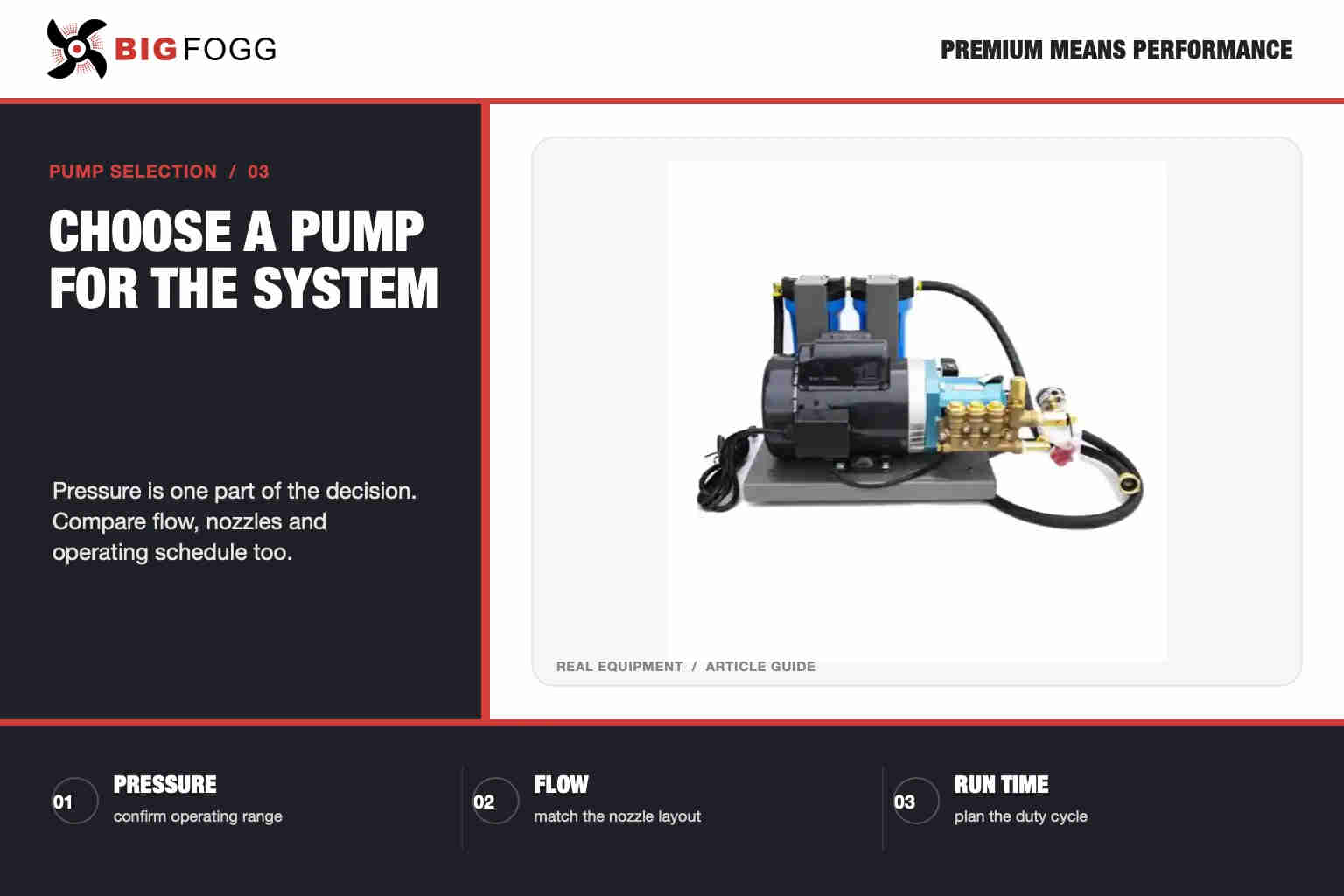
Quick answer: Select a misting pump as part of the complete system. Match its pressure and flow to the nozzles, total line configuration, operating schedule and site utilities. Also compare motor voltage, noise, enclosure, filtration, service access and whether the application needs intermittent or extended operation.
In This Article
- Start with the system requirements
- Compare pump configurations
- Questions for a pump quote
- Size the pump with the rest of the design
- Frequently asked questions
- Review the pump against the whole operating cycle
Start with the system requirements
A pump should not be chosen by pressure rating alone. Write down the number and type of nozzles, proposed line length and layout, target operating pressure, expected hours of use, water source, available voltage and any sound or weather-protection needs. Share the information with the system designer so the pump and distribution lines are sized together.
BigFogg lists pump options for low-, mid- and high-pressure systems. Its current product pages show mid-pressure pump configurations at 160–180 or 300 psi and high-pressure pump options around 1,000 psi. Those values refer to BigFogg’s products; check the chosen model’s page and installation guidance for current requirements.
Compare pump configurations
| Consideration | What to confirm |
|---|---|
| Pressure and flow | Pump output matches the system’s nozzles and configuration |
| Duty cycle | The model is intended for the expected run time and application |
| Electrical supply | Voltage, circuit and connection match the site |
| Noise and placement | Pump location and drive style suit nearby guests, staff or residents |
| Water and filtration | Inlet requirements and filter specification match the water supply |
| Service | Access, enclosure, warranty and maintenance instructions are documented |
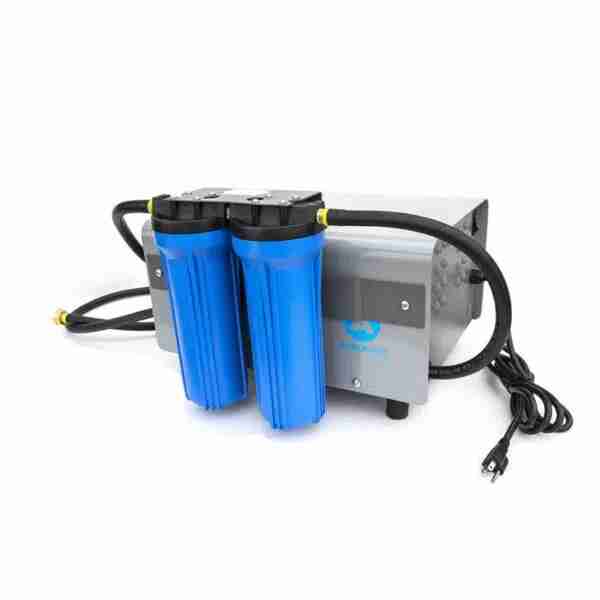
BigFogg describes both direct-drive and pulley-driven high-pressure pumps, with enclosed options and VFD models in its range. These configurations have different installation and operating characteristics. Ask the team to explain which model fits your site’s run time, sound requirements and available space rather than treating pump styles as interchangeable.
Questions for a pump quote
Send the system sketch, nozzle and line details, water supply, electrical information, expected schedule and pump location. Ask for the pressure and flow at the proposed configuration, the required filtration, startup and shutdown instructions, service intervals and warranty. BigFogg’s misting pump range includes multiple drive types; browse the low-pressure, mid-pressure and high-pressure system pages to compare the broader setup.
Size the pump with the rest of the design
Pump selection starts with the system it must serve. The designer needs the proposed nozzle type and quantity, line configuration, operating pressure, water supply, run schedule and site utilities. A change in any of these inputs can affect the required pump configuration, so avoid selecting by horsepower or pressure alone.
Before requesting a recommendation, gather:
- A marked drawing with line routes, pump location and service access.
- The nozzle and fitting choices or the application the system will serve.
- Available voltage and circuit information, plus any limits on noise or placement.
- Expected operating periods and whether the system runs seasonally.
- Filtration, startup, shutdown and maintenance requirements for the water source.
Use BigFogg’s pressure-system guide to understand the broader options. Then request a configuration that states how the pump range matches the proposed lines and nozzles.
Review the pump against the whole operating cycle
Pump selection should follow the complete system design, including pressure, flow demand, nozzle configuration, filtration, and expected run schedule. A motor or horsepower label on its own does not confirm that a pump is suitable for a particular line. Ask the supplier to identify the pump’s intended duty and the operating conditions associated with the proposed configuration.
The electrical details deserve the same attention as the water-side design. Confirm the model’s voltage, connection requirements, location, ventilation or enclosure needs, and any site restrictions with the supplier and a qualified installer where applicable. Also ask how the pump is started and stopped, what routine service it needs, and which parts are considered wear items. Keep the product manual with the installation record so future operators can use the correct service procedure.
When comparing options, keep the site plan and nozzle schedule consistent across proposals. BigFogg’s misting pump collection lists current configurations, while the pressure-system comparison guide explains why a pressure class must be matched to the application. If you are still gathering information, the layout guide helps organize site measurements before requesting a quote.
Frequently Asked Questions
Can I use any misting pump with any nozzle line?
No. Pump output, pressure, line and nozzles need to be compatible. Confirm the full configuration with the manufacturer or system designer.
What size pump do I need for my number of nozzles?
Nozzle count alone is not enough to size a pump. The nozzle specifications, line configuration, pressure and operating conditions all matter.
Is a direct-drive pump better than a pulley-driven pump?
Neither is best for every site. BigFogg describes different uses for each configuration; compare noise, duty cycle, installation location and service requirements for the specific model.
What electrical information should I provide?
Provide the available voltage, outlet or circuit details, pump location and any site constraints. Confirm the exact requirements on the selected pump’s product page.
Does a higher horsepower rating mean a better misting pump?
No. The pump must match the system’s pressure, flow, nozzles, run schedule and site utilities. Ask the supplier to explain the selected model against the complete layout.
Related Resources
About BigFogg
BigFogg has supplied misting systems and fans since 1999 for sports, commercial, industrial and residential applications. Explore BigFogg misting systems or contact the team.