Misting System Maintenance: Filters, Nozzles, and Safe Troubleshooting
Quick answer: Maintain a misting system by checking the water supply, filters, visible lines and nozzle spray pattern, then servicing the pump according to its model instructions. Shut the equipment down and relieve pressure as directed before inspection. Do not use tools, cleaners or chemicals unless the manufacturer specifies them for that system.
In This Article
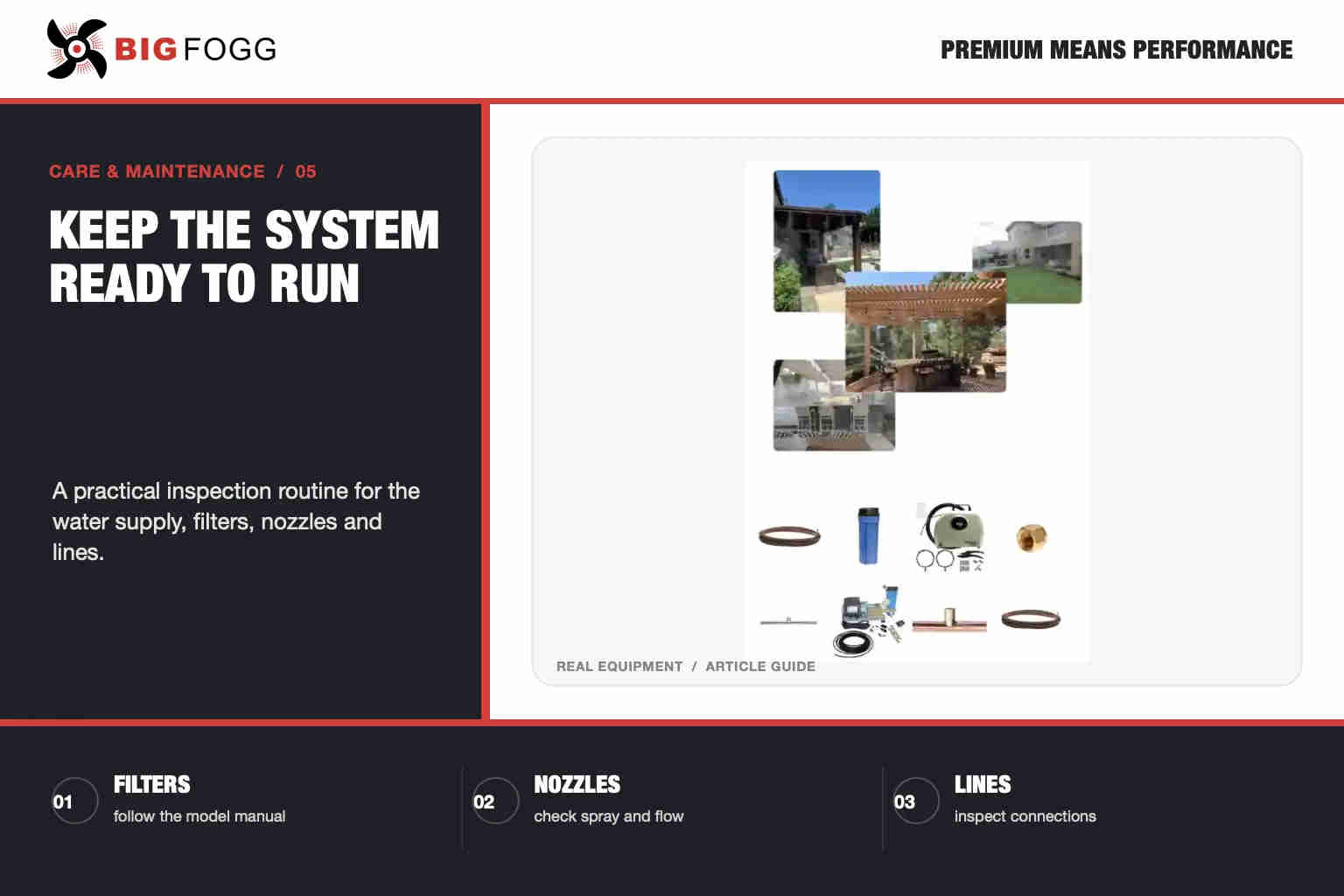
- Use a simple inspection routine
- Troubleshoot changes carefully
- Prepare for seasonal shutdown
- Keep a simple maintenance record
- Frequently asked questions
- Use a safe, symptom-first troubleshooting sequence
Use a simple inspection routine
| Component | What to look for | Next step |
|---|---|---|
| Water supply | Interrupted flow, visible debris or a closed valve | Confirm the supply is available before restarting the system. |
| Filter | Condition and service interval listed for the model | Replace or clean only as the product manual directs. |
| Nozzles | Changed spray pattern, visible blockage or dripping | Follow the nozzle instructions or ask BigFogg about service. |
| Lines and fittings | Visible leaks, loose supports or damage | Shut the system down and arrange repair before operation. |
| Pump and controls | Unusual noise, leaks, warning indicators or overheating | Stop using the unit and follow its manual or contact a qualified service provider. |
The correct filter and service interval depend on the pump and water source. BigFogg lists filtration as part of many of its high-pressure systems; verify the filter specification for your product rather than assuming one element fits every setup. Keep a log of service dates and observed spray patterns to spot changes early.
Troubleshoot changes carefully
If output changes, first note whether the entire system or one section is affected. Check the model’s normal startup procedure, available water supply and any filter indicators. Then compare the spray with the system’s usual pattern from a safe distance. A change may point to a supply, filter, nozzle, line or pump issue, but diagnosis depends on the equipment.
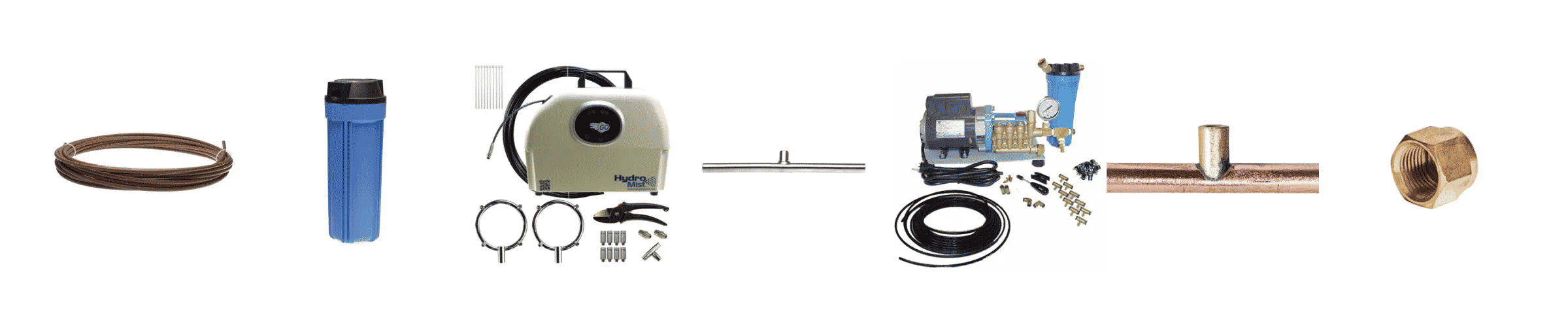
Turn the pump off, disconnect power when the manual directs, close the water supply and follow the manufacturer’s pressure-release procedure before servicing. Do not probe small nozzle openings with wire or improvise with solvents or compressed air. If the cause is unclear, use the product manual or ask BigFogg for service guidance. Review its misting filters, misting nozzles and misting pump options.

Prepare for seasonal shutdown
For a seasonal system, follow the pump and line manufacturer’s shutdown, draining and storage instructions. Confirm who is responsible for protecting the equipment during freezing weather, how the system should be restarted, and whether a technician should inspect it before the next operating season. Requirements differ by model and installation.
BigFogg’s misting technology FAQs cover general system questions. For equipment-specific troubleshooting, keep the model name, pump details, photos and symptoms ready when you contact BigFogg.
Keep a simple maintenance record
A maintenance log helps staff compare the system with its normal operation. Record the inspection date, water or filter observations, visible spray changes, pump sounds or alerts, work completed, and the model or part involved. This history can help the service provider understand when a problem began without encouraging staff to open or alter equipment.
Use the manufacturer’s schedule to decide when to inspect or service each component. Before the season, confirm that the startup procedure, filter, nozzle and pump instructions are available to the person responsible. During operation, report leaks, unusual noise, changed spray or other warnings through the approved service process. At shutdown, follow the model-specific instructions for draining, storage and restart.
If a pump issue is suspected, keep the model and configuration details ready and review the pump selection guide to identify what system information the supplier may need. Do not substitute a generic cleaning interval for the product manual.
Use a safe, symptom-first troubleshooting sequence
When a system’s spray changes, begin with a visual check and the model’s operating instructions. Note what changed, when it started, which area is affected, and whether the pump or water supply shows an obvious issue. A gradual change across several nozzles may point to a different cause than one nozzle behaving differently, but the manual and supplier should guide diagnosis for the particular system.
Before opening a filter housing, removing a nozzle, or servicing the pump, shut the system down and follow the manufacturer’s isolation and pressure-release procedure. Do not loosen pressurized fittings or improvise a cleaning chemical. Use only the cleaning method and replacement parts approved for the selected model. If the pump is unusually hot, noisy, leaking, or repeatedly tripping, stop operation and contact the service provider rather than continuing to run it.
Keep a simple log of inspection dates, parts replaced, water-supply observations, and any recurring symptoms. This record helps distinguish routine wear from a pattern that needs professional service. BigFogg lists compatible misting filters, nozzles, and pump options; verify that a replacement matches the system before ordering.
Frequently Asked Questions
How often should misting filters be changed?
Follow the filter and pump instructions for the specific model and water conditions. Check the filter at the stated interval and replace it with a compatible element.
How do I know if a misting nozzle is clogged?
Look for a change from the system’s usual spray pattern or visible dripping. Shut down the unit and follow the nozzle instructions; do not insert an improvised tool into the opening.
Can I clean a nozzle with vinegar or another household product?
Only use a cleaning method the manufacturer approves for that nozzle and system. Unapproved chemicals can damage materials or affect system operation.
What should I do if the pump gets unusually noisy?
Stop the unit if its sound changes significantly, check the product manual and contact a qualified service provider or BigFogg. Do not open or repair a pump unless the instructions authorize it.
Can I use compressed air to clear a misting nozzle?
Only if the nozzle or system instructions explicitly allow that method. Use the approved cleaning procedure for the specific product, and contact the supplier if the cause of a changed spray pattern is unclear.
Related Resources
About BigFogg
BigFogg has supplied misting systems and fans since 1999 for sports, commercial, industrial and residential applications. Explore BigFogg misting systems or contact the team.