How to Plan a Misting System Layout: Coverage, Lines, and Zones
Quick answer: Plan a misting system layout by mapping the occupied area, water and power access, mounting surfaces, airflow, sensitive equipment and maintenance routes. Then divide the space into practical zones and have the pump, line length and nozzle layout specified together. There is no single spacing or coverage formula that fits every site.
In This Article
- Draw the area before choosing hardware
- Plan lines and zones
- Check installation and utilities
- Turn the drawing into a system brief
- Frequently asked questions
- Turn a site sketch into an installation brief
Draw the area before choosing hardware
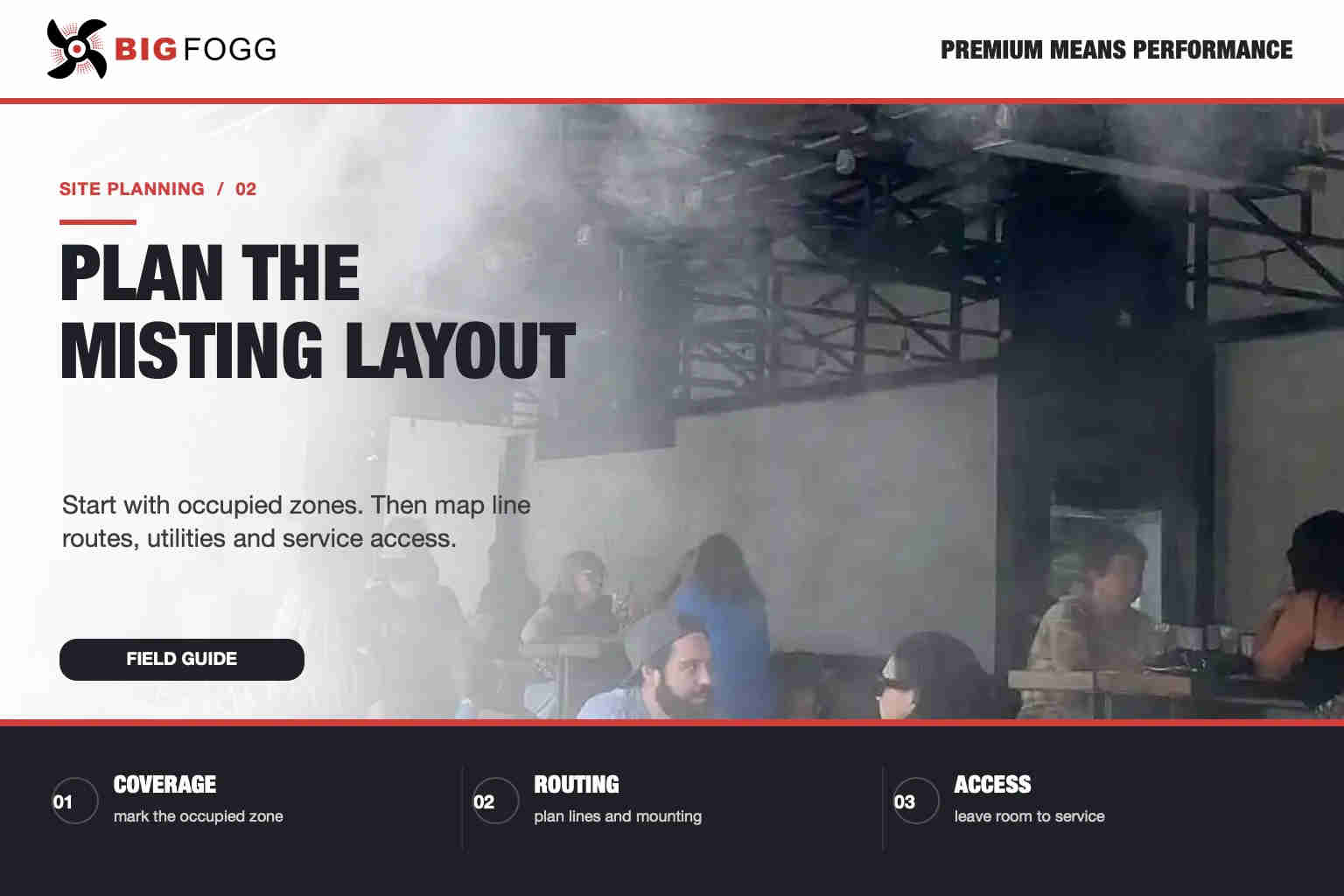
Make a simple plan that shows the dimensions, seating or work positions, doors, walkways, shade structures, walls and nearby equipment. Mark where people spend time and where airflow should move. Add the water source, electrical panel or outlets, drains, and any surfaces or products that must remain dry.
The drawing helps distinguish a fixed perimeter installation from an overhead layout or separate cooling zones. It also shows where the mist line can be supported and where a technician needs access to inspect the system. BigFogg offers commercial systems and industrial systems for different kinds of sites; the final configuration depends on the installation.
Plan lines and zones
| Layout question | What to show on the plan |
|---|---|
| Where are the occupied zones? | Tables, queue areas, workstations, seating, or activity areas |
| How will the mist be carried? | Airflow direction, open sides, wind exposure and nearby fans |
| What should not get wet? | Food, electronics, flooring, machinery, stock, plants or neighboring property |
| Where can a line be mounted? | Structure, mounting height, route, supports and service access |
| Does the space need separate controls? | Independent seating, production or event zones and operating schedules |
Do not select nozzle count based only on square footage. The pump and line must be specified for the number and type of nozzles, line arrangement, intended pressure and site requirements. Ask the designer to document how the proposed configuration serves each zone and what conditions may affect the spray.
Check installation and utilities
Before requesting a quote, note the available water pressure and quality, electrical service, distance from the pump to the misting line, mounting material and expected run time. Include site photos and identify any access limits for installation or later maintenance. If the site is seasonal, describe how the system will be shut down and protected between operating periods.
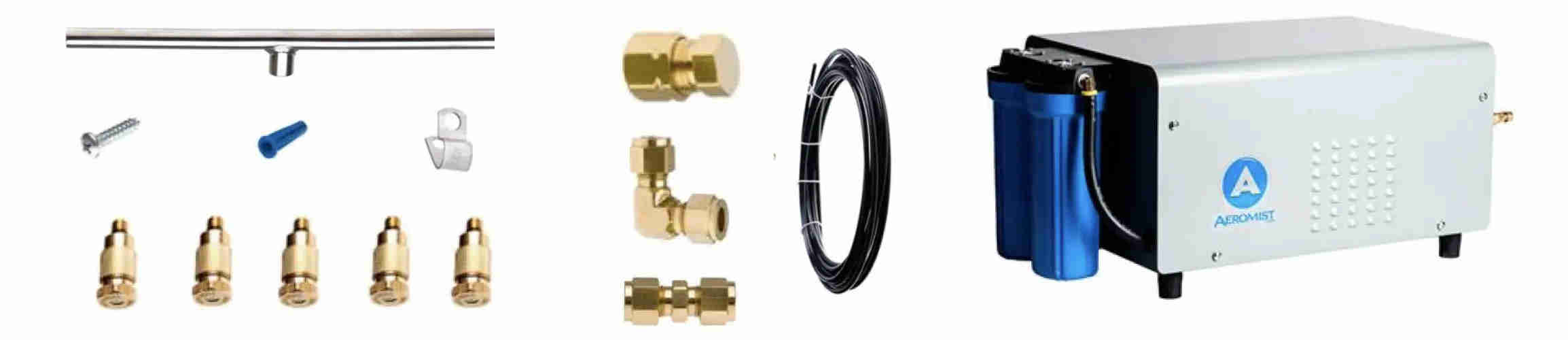
The quote should identify pump pressure and capacity, compatible tubing and fittings, filtration, controls, installation scope, startup procedure and maintenance responsibilities. Review BigFogg’s misting systems, nozzles and misting pumps, then contact BigFogg with the site plan.
Turn the drawing into a system brief
A useful drawing is specific enough for a designer to review but does not need to be a construction plan. Add approximate dimensions, the occupied zone, the proposed line route, mounting points, pump location, water and electrical sources, and any objects or paths that should remain clear. Mark areas that may need separate operating schedules so the designer can assess whether zones make sense.
Send the drawing with site photos and a short operating description. Include when the system will run, who will use it, what conditions affect the space, and what maintenance access is available. Ask the supplier to return a configuration showing the pump, line, fittings, nozzles, controls and service approach together; that makes it easier to identify missing pieces before installation.
For pressure and pump compatibility, read how to choose a misting pump alongside the pressure-system comparison.
Turn a site sketch into an installation brief
A useful misting layout drawing shows both where the equipment goes and how people will use the space. Mark entrances, seating or workstations, walkways, doors, shade, wind exposure, nearby electronics, and surfaces that need to stay dry. Then note the water and electrical connection points, likely pump location, mounting surfaces, and a clear route for routine inspection.
Use the sketch to identify separate operating areas. A dining zone with different hours from a queue area may need its own control plan, while a continuous open space may be planned as one zone. The supplier should decide whether that means separate controls, lines, or another configuration after reviewing the actual pump and nozzle requirements; the sketch is not a substitute for system sizing.
When requesting a design, include measured dimensions, current site photos, expected run times, and any limits on drilling or mounting. Ask the supplier to mark proposed line routes and service access on the drawing. BigFogg’s nozzle catalog and pump collection help identify the components to discuss. For pressure selection, see the guide to low-, mid- and high-pressure systems.
Frequently Asked Questions
How many misting nozzles do I need?
It depends on the layout, nozzle type, pump and system pressure. Provide measurements and a site plan so the system can be specified as a complete configuration.
How far apart should misting nozzles be installed?
Spacing depends on the selected system and application. Use the spacing BigFogg specifies for the product and have a designer confirm it for the site.
Can one pump serve multiple zones?
A pump may be configured for a system with multiple lines or zones, but flow, pressure and controls must be designed together. Confirm the capacity and operating plan before installation.
What should I send for a misting system quote?
Send dimensions, a marked site plan, photos, water and electrical details, mounting information, operating hours and a list of areas that should remain dry.
Can I use the same layout indoors and outdoors?
Do not assume that one layout suits both. Airflow, moisture tolerance, utilities, mounting and operating conditions can differ. Have each space reviewed using its own plan and equipment requirements.
Related Resources
About BigFogg
BigFogg has supplied misting systems and fans since 1999 for sports, commercial, industrial and residential applications. Explore BigFogg misting systems or contact the team.