Industrial Misting Fans: The Ultimate Guide to Warehouse and Outdoor Cooling Solutions (2026)
Industrial misting fans represent one of the most cost-effective and efficient cooling solutions available for large industrial spaces, warehouses, manufacturing facilities, and outdoor environments. Unlike traditional air conditioning systems that consume massive amounts of energy and require extensive installation, industrial misting fans leverage evaporative cooling technology to deliver powerful temperature reduction with minimal overhead. Whether you’re managing a distribution center facing extreme heat conditions, a patio needing guest comfort, or any industrial space requiring climate control, understanding how industrial misting fans work and how to choose the right system is essential to your operation’s success.
The need for effective cooling solutions in industrial settings has never been more critical. Warehouses and manufacturing facilities face constant challenges from rising temperatures, employee heat stress, and productivity loss. Traditional HVAC systems often prove ineffective for vast open spaces and prohibitively expensive to operate, making industrial misting fans an attractive alternative that combines powerful airflow with evaporative cooling benefits. This guide walks you through everything you need to know about these systems—from basic mechanics to advanced selection criteria.
In this comprehensive article, we’ll explore how industrial misting fans function, examine the technology behind them, discuss their countless applications, and provide actionable guidance for selecting the perfect system for your specific needs. You’ll discover why thousands of facilities worldwide trust misting fans as their primary cooling solution.
What Are Industrial Misting Fans?
Industrial misting fans are heavy-duty cooling devices that combine a high-velocity fan with a water misting system to create effective evaporative cooling in large commercial and industrial environments. These are not consumer-grade patio misters—industrial versions are engineered with more powerful motors, higher airflow capacity, larger water tanks, and robust construction materials designed to withstand continuous operation in demanding conditions.
The essential components of an industrial misting fan include a powerful electric motor driving a large-diameter fan blade, a water delivery system with pressurized nozzles, and a durable frame built from corrosion-resistant materials like stainless steel or powder-coated aluminum. Industrial models often feature oscillating capabilities, allowing them to distribute cool air across wider areas. The water tank capacity in industrial units typically ranges from 50 to 100 gallons or more, depending on the model and intended usage duration.
Industrial Fact: Heavy-duty industrial misting fans are engineered for continuous operation and can drop ambient temperatures by 10–20 degrees Fahrenheit in optimal conditions without drenching users with water.
What distinguishes industrial misting fans from consumer alternatives is their engineering focus on durability and performance. These systems are constructed to handle daily operation in tough environments—whether that’s a sweltering warehouse floor, a dusty construction site, or humid agricultural facilities. The materials selected resist corrosion from constant water exposure and salt-air environments. The motors are rated for extended run times without overheating, and the nozzle systems maintain consistent mist patterns even with heavy usage.
How Industrial Misting Fans Work
Understanding the mechanics of industrial misting fans begins with grasping the principle of flash evaporation. This natural cooling phenomenon occurs when water in very fine mist form evaporates rapidly in warm air, absorbing heat energy from the surrounding environment and creating noticeably cooler air in the process.
The operation sequence is straightforward but effective: water is drawn from the tank into the pressurized nozzle system, where it emerges as an ultra-fine mist. The large fan simultaneously creates powerful airflow that propels this mist throughout the target area. As mist droplets travel through the warm air, they evaporate almost immediately, drawing thermal energy from the environment—a process that causes the air temperature to drop measurably. The fan then distributes this cooler air across the space, creating a refreshing effect without saturating surfaces or leaving people drenched.
The effectiveness of this cooling depends on several environmental factors. In dry climates with low humidity levels, industrial misting fans can achieve temperature reductions of 15–20 degrees Fahrenheit. In more humid environments, the cooling effect may be more modest—typically 10–15 degrees—because humid air cannot absorb as much evaporated water. The relationship between ambient humidity and cooling efficiency makes industrial misting fans exceptionally valuable in arid and semi-arid regions.
Cooling Science: The latent heat of vaporization—the energy required to convert liquid water to vapor—powers the cooling effect, with each pound of water evaporating absorbing approximately 970 BTU of thermal energy from surrounding air.
Modern industrial misting fans incorporate smart controls that allow facility managers to adjust misting intensity, fan speed, and cycling patterns. Some units feature automatic humidity sensors that regulate misting output based on current conditions, preventing over-saturation while maximizing cooling efficiency. This intelligent operation reduces water consumption while maintaining optimal temperature control.
Key Benefits for Warehouses and Industrial Spaces
For warehouse managers and facility supervisors, industrial misting fans deliver compelling advantages that impact both operations and bottom-line performance. The primary benefit is dramatic energy cost reduction compared to traditional air conditioning systems.
Energy Efficiency and Cost Savings
Industrial misting fans consume a fraction of the power required by conventional HVAC systems. Traditional air conditioning in large warehouses can cost $0.50 to $1.00 per square foot annually, while evaporative misting systems operate at approximately 1/10th those energy costs. A 10,000-square-foot warehouse might spend $5,000–$10,000 yearly on AC energy, compared to just $500–$1,000 with misting fan systems. For warehouse operations managing thin profit margins, this represents meaningful budget relief.
Improved Worker Productivity and Safety
Heat stress reduces worker productivity, increases error rates, and creates serious safety concerns. OSHA research demonstrates that workers operating in temperatures above 90 degrees experience measurable decreases in efficiency and increased accident risk. Industrial misting fans maintain comfortable working conditions by reducing ambient temperature, leading to fewer heat-related incidents, lower absenteeism, and improved employee satisfaction.
Rapid Installation and Flexibility
Unlike permanent HVAC systems requiring extensive ductwork and structural modifications, industrial misting fans are often portable or wall-mounted solutions that deploy quickly. This flexibility allows facility managers to expand cooling coverage as needed or relocate equipment when warehouse layouts change. New cooling zones can be added within days rather than the months required for traditional HVAC installation.
Complementary to Existing Systems
Industrial misting fans don’t replace existing climate control—they complement it effectively. Many warehouses use misting fans in high-traffic zones while maintaining partial AC in offices and administrative areas, creating a balanced approach that maximizes comfort while minimizing energy expenses.
Types of Industrial Misting Fans
Industrial misting fans come in several configurations, each designed for specific applications and environmental conditions.
Pedestal and Portable Misting Fans
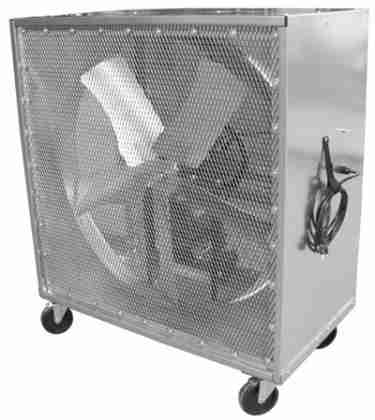
Mobile misting fans mounted on wheeled pedestals offer maximum flexibility for warehouse environments. These units can be positioned precisely where cooling is needed most—near workstations, loading docks, or production areas. Pedestal models typically range from 20 to 30 inches in diameter and can be repositioned easily as operational needs change. Their mobility makes them ideal for seasonal cooling demands or temporary projects.
Wall-Mounted Industrial Misting Fans
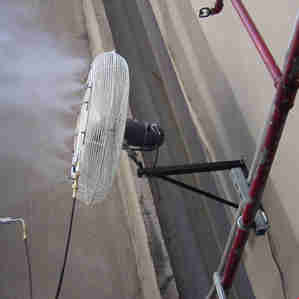
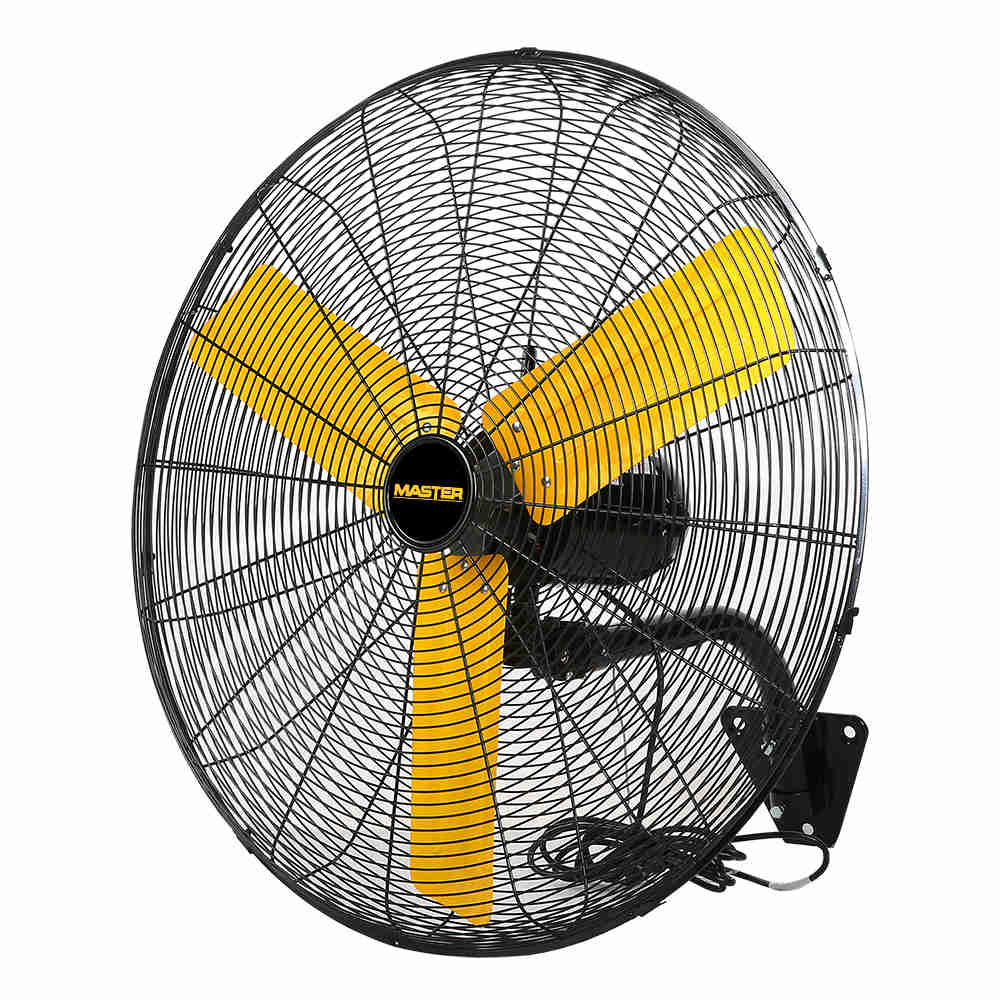
For permanent cooling coverage, wall-mounted units provide fixed installation with powerful airflow coverage across large zones. These models are bolted directly to structural elements and often feature oscillating mechanisms that distribute cool air across wider areas than stationary units. Wall mounting eliminates floor-space consumption and provides consistent, reliable operation.
High-Velocity Outdoor Misting Fans
Specially engineered for outdoor applications, these fans withstand weather exposure, salt-air environments, and continuous operation under direct sunlight. Outdoor industrial models feature enhanced corrosion resistance and sealed bearing systems that prevent moisture damage. They’re commonly deployed at construction sites, outdoor industrial facilities, agricultural operations, and resort properties.
Big Fogg Misting Systems and Solutions
360-Degree Misting Systems
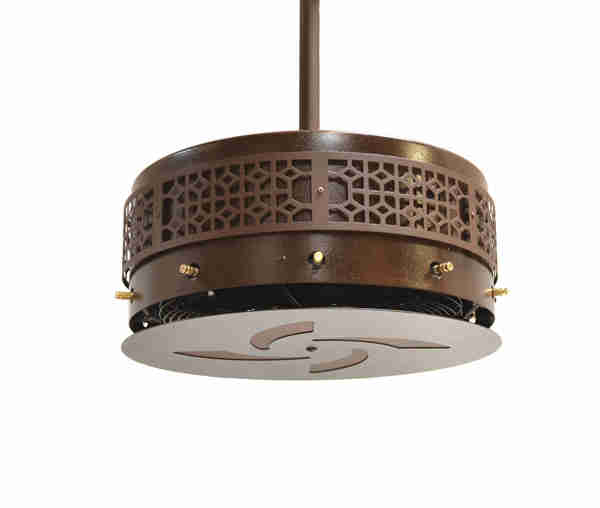
Advanced industrial models feature 360-degree nozzle distribution, allowing mist dispersal in all directions simultaneously. These units deliver cooling coverage in circular patterns, making them ideal for open warehouse spaces where central placement maximizes coverage area. The radial design ensures even temperature distribution throughout the target zone.
Industrial Applications and Use Cases
Industrial misting fans serve diverse applications across multiple sectors, each benefiting from their unique cooling advantages.
Warehouse and Distribution Center Cooling
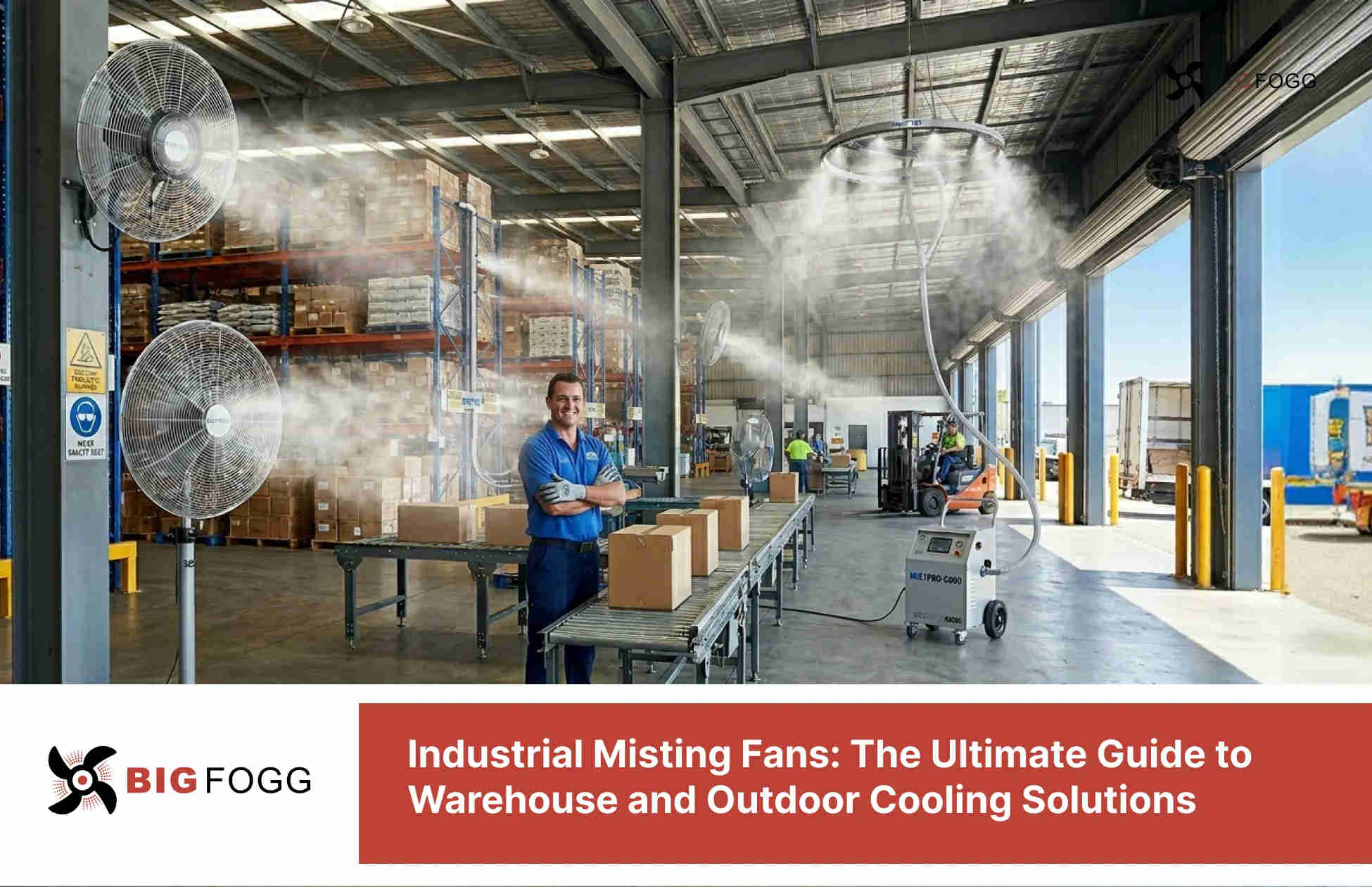
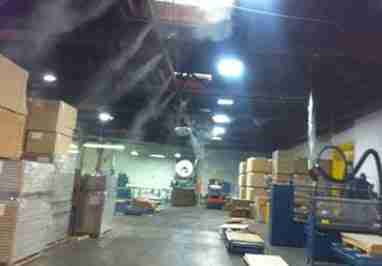
Distribution facilities represent the largest market for industrial misting fans. These massive spaces—often 40,000+ square feet with minimal insulation—generate extreme heat from inventory, equipment operation, and concentrated worker activity. Misting fans provide cost-effective temperature management that keeps workers safe during peak heat periods while preserving product integrity in temperature-sensitive storage areas.
Manufacturing and Production Facilities
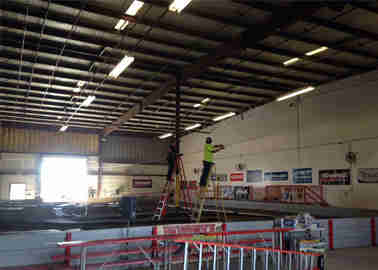
Manufacturing plants generate substantial internal heat from machinery, welding operations, and high-density worker populations. Industrial misting fans cool production zones while operating around sensitive equipment without creating moisture hazards. They’re particularly valuable in metalworking, automotive, and electronics manufacturing where thermal management is critical.
Agricultural and Livestock Operations
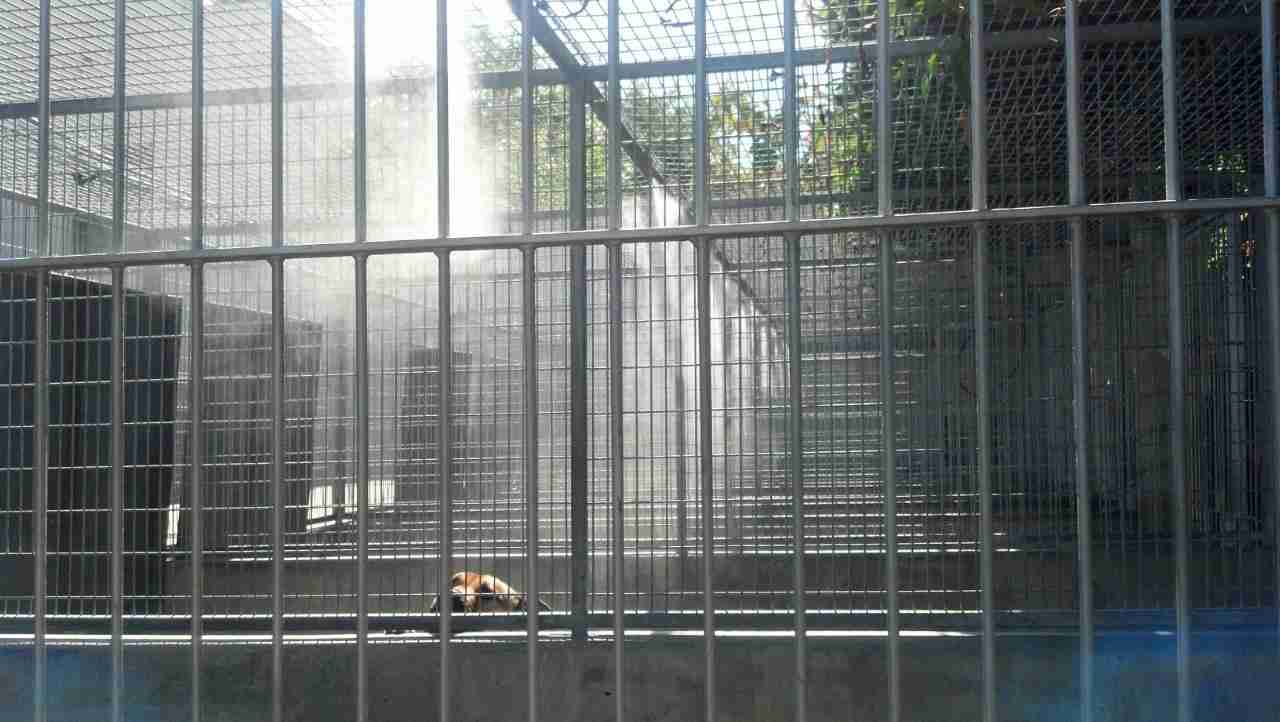
Dairies, equestrian facilities, and livestock operations rely on industrial misting fans to prevent heat stress in animals and workers alike. Livestock productivity and health decline sharply in hot conditions, making misting fans essential for agricultural profitability. Installation in milking parlors, feed areas, and animal housing zones directly improves animal welfare and production output.
Choosing the Right Industrial Misting Fan
Selecting an appropriate industrial misting fan requires evaluating several critical factors specific to your facility and operational requirements.
Space Coverage and Airflow Requirements
Calculate your target cooling area’s square footage and ceiling height. Industrial fans typically cover 1,500–2,500 square feet per unit depending on power rating. For a 10,000-square-foot warehouse, you’d typically need 4–6 units strategically positioned to ensure coverage throughout the space. Consider air circulation patterns, location of heat sources, and worker density when positioning units.
Climate and Humidity Conditions
Your local climate significantly impacts misting fan performance. Dry, arid regions experience maximum cooling benefits (15–20 degree reduction), while humid tropical climates see more modest results (10–15 degree reduction). If your facility is in a humid area, choosing higher-capacity systems compensates for reduced evaporative efficiency.
Power and Water Requirements
Industrial misting fans typically require 110–240V electrical connections with adequate circuit capacity. Verify your facility’s electrical infrastructure can support additional load. Water consumption varies by model and operating intensity, typically ranging from 5–15 gallons per hour. Confirm adequate water supply and drainage for continuous operation.
Durability and Construction Materials
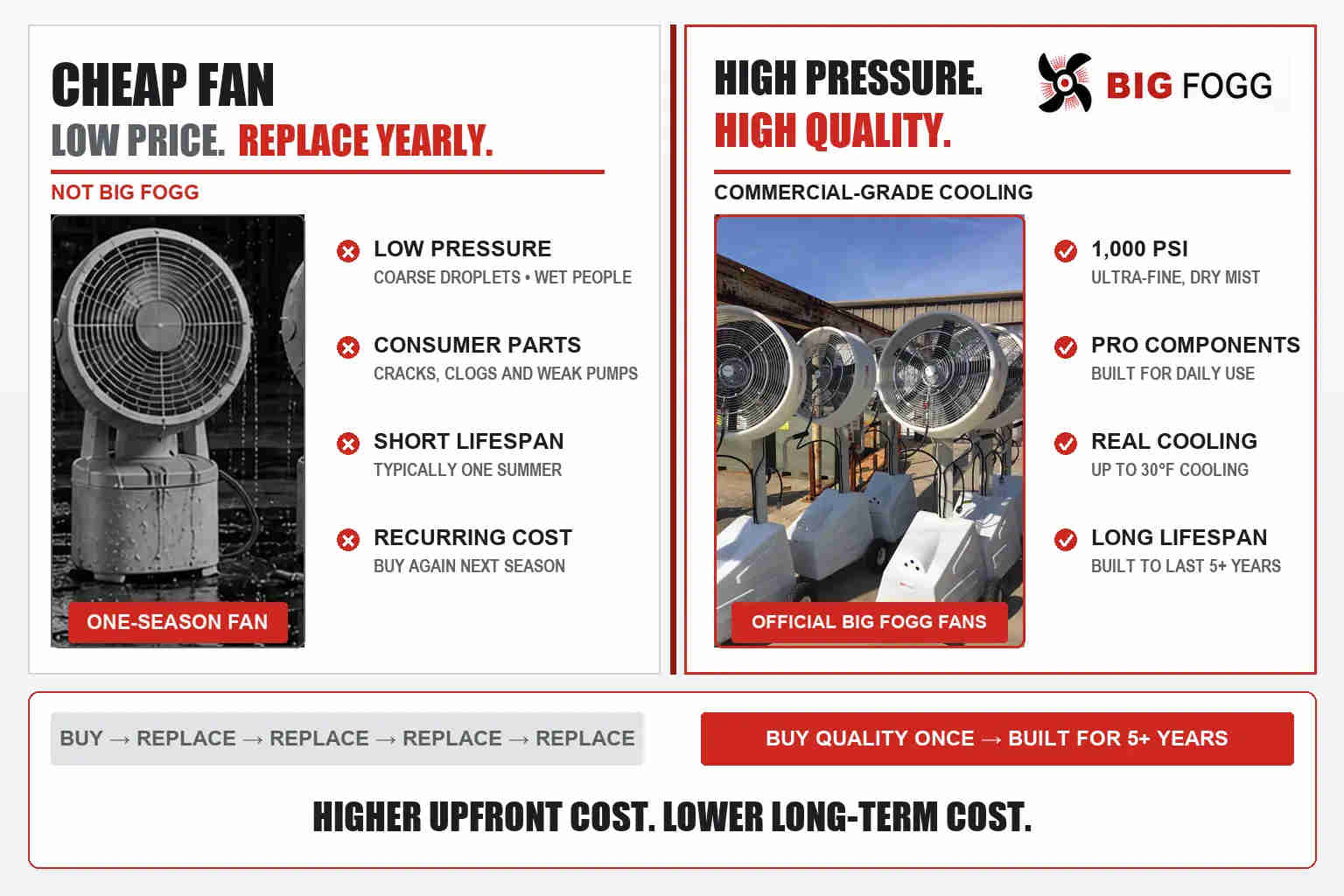
For salt-air environments, coastal facilities, or wet applications, specify stainless steel or premium powder-coated aluminum construction. Budget-grade steel corrodes quickly in these conditions, requiring frequent maintenance and replacement. The upfront investment in quality materials extends system lifespan from 3–5 years to 10+ years.
Noise Considerations
Industrial misting fans generate operational noise, typically 75–85 decibels. In environments sensitive to noise pollution, specify models with vibration isolation mounts and lower-speed options that reduce noise while maintaining adequate cooling.
Selection Tip: Consider purchasing slightly oversized units (10–15% greater capacity than calculated minimum). Oversized systems operate at lower intensities, extending equipment lifespan and improving reliability.
Installation and Maintenance Considerations
Proper installation and regular maintenance ensure industrial misting fans deliver reliable performance throughout their operational lifespan.
Installation Best Practices
Mount pedestal units on firm, level surfaces away from high-traffic areas to prevent accidents. Wall-mounted systems require secure attachment to structural beams capable of supporting concentrated loads. Position units to maximize airflow distribution—typically elevated 6–8 feet above floor level for optimal reach. Ensure electrical connections meet local code requirements and incorporate ground fault protection on outdoor circuits.
Water System Setup
Connect misting fans to reliable, filtered water supplies to prevent nozzle clogging. Install sediment filters (20–50 microns) and check filters regularly for clogs. If using well water or non-municipal sources, specify water quality testing to identify potential mineral deposits or contaminants. Consider hardness levels—hard water (over 200 PPM dissolved minerals) causes mineral buildup that blocks nozzles and reduces misting efficiency.
Regular Maintenance Schedule
Establish monthly maintenance routines including filter inspection, nozzle cleaning, motor bearing lubrication, and electrical connection verification. Quarterly services should include complete nozzle replacement or deep cleaning with descaling solutions. Annual maintenance includes bearing replacement, seal inspection, and performance testing. Proper maintenance extends equipment lifespan by 50–100% compared to neglected systems.
Seasonal Storage
In freezing climates, drain all water from misting systems before winter storage to prevent freeze damage to pumps and nozzles. If units remain operational year-round, maintain antifreeze solutions in water circuits. Inspect seals and bearings after winter storage before resuming spring operation.
Comparing Industrial Misting Fans to Other Cooling Solutions
Industrial facility managers often evaluate misting fans against alternative cooling approaches. Here’s how they compare:
Versus Traditional Air Conditioning
Traditional HVAC systems provide excellent climate control but consume massive amounts of energy, cost $50,000–$500,000+ to install in large spaces, and require permanent infrastructure modification. Industrial misting fans cost 80–90% less, operate at 1/10th the energy cost, and deploy within days. However, AC provides precise temperature control—suitable for environments where exact climate management is required rather than misting’s simplicity and cost-effectiveness.
Versus Evaporative Coolers (Swamp Coolers)
Evaporative coolers and misting fans use similar cooling principles but differ in implementation. Coolers circulate conditioned air through ductwork, while misting fans create localized zones of cool air. Coolers work exceptionally well in very dry climates but perform poorly in humid environments. Misting fans maintain effectiveness across wider humidity ranges and provide targeted cooling without ductwork installation.
Versus Portable Air Conditioning Units
Portable AC units offer moving air conditioning but consume significant electricity (often requiring dedicated 240V circuits) and cost $3,000–$8,000 per unit. They’re suitable for small spaces but impractical for large warehouses. Industrial misting fans cover significantly larger areas for lower total cost and minimal electrical demand.
2026 Technology Innovations
The industrial misting fan market continues evolving with innovative technologies enhancing performance and efficiency. Recent developments in 2026 include:
Advanced Ultrasonic Misting Technology
Manufacturers have introduced TurboCool™-style technologies combining high-performance airflow with ultrasonic misting systems. These innovations create exceptionally fine mist particles—much finer than traditional pump-based systems—allowing faster evaporation, greater cooling effectiveness, and reduced wetness issues. Ultrasonic systems use minimal water while delivering maximum cooling performance.
Smart IoT Controls and Monitoring
Modern industrial fans integrate IoT sensors and cloud-based monitoring systems. Facility managers receive real-time alerts on equipment status, maintenance needs, and performance metrics. Intelligent controls automatically adjust misting intensity based on temperature sensors, humidity levels, and time-of-day programming. These systems reduce water consumption by 15–30% while maintaining optimal cooling comfort.
Energy-Efficient Motor Technologies
2026-generation industrial misting fans incorporate brushless DC motors and variable-speed drive systems that automatically adjust fan speed to match cooling demands. These motors consume 20–40% less electricity than fixed-speed alternatives while maintaining superior air delivery and reliability.
Corrosion-Resistant Materials
Advanced coating technologies and composite materials extend equipment durability in harsh environments. Some 2026 models feature polymer nozzles resistant to mineral deposits and ceramic coatings on metal components that withstand salt-air and industrial chemical exposure.
Conclusion
Industrial misting fans represent an intelligent investment for any facility requiring cost-effective, reliable cooling solutions in large spaces. Whether managing a warehouse facility, manufacturing plant or agricultural operations these systems deliver measurable benefits through energy savings, improved worker productivity, and enhanced operational efficiency. By understanding how they work, evaluating your specific cooling needs, and selecting appropriately sized equipment, you position your facility for comfortable, sustainable climate management.
The convergence of proven evaporative cooling principles with modern engineering and smart technology makes 2026 an excellent time to upgrade or implement industrial misting systems. With installation costs recovering within months through energy savings and productivity improvements, industrial misting fans stand as one of the highest-ROI facility upgrades available today.
Ready to transform your facility’s cooling efficiency? BigFogg offers comprehensive industrial misting solutions tailored to warehouses, manufacturing, agricultural, and commercial applications. Our expert team evaluates your specific space requirements and recommends optimized systems that maximize cooling while minimizing operational costs.
Discover BigFogg’s Industrial Misting Solutions
Get expert guidance on selecting the perfect industrial misting fan system for your facility. Our industrial cooling specialists have served thousands of warehouses, manufacturing plants, and commercial operations.
Frequently Asked Questions About Industrial Misting Fans
How much temperature reduction can I expect from an industrial misting fan?
Industrial misting fans typically reduce ambient temperature by 10–20 degrees Fahrenheit in optimal conditions. Dry climates with low humidity see maximum cooling results (15–20 degrees), while humid environments experience more modest reduction (10–15 degrees). Multiple units positioned strategically maximize coverage and cooling effectiveness across large spaces.
Are industrial misting fans expensive to operate?
No—industrial misting fans are among the most cost-effective cooling solutions available. A typical system consuming 1–2 kilowatts of power costs approximately $15–$30 monthly to operate, compared to $300–$500 for traditional air conditioning in equivalent spaces. Water consumption (5–15 gallons per hour) adds minimal operational expense in most facilities.
Can I use industrial misting fans in humid climates?
Yes, though cooling effectiveness is reduced compared to arid regions. In humid areas, misting fans provide 10–15 degrees temperature reduction versus 15–20 degrees in dry climates. The reduced evaporation rate in humid air limits cooling capacity, but the systems still deliver substantial comfort improvements and cost savings compared to traditional AC.
What maintenance do industrial misting fans require?
Monthly maintenance includes filter inspection, nozzle cleaning, and bearing lubrication. Quarterly deep cleaning with descaling solutions prevents mineral deposits, and annual service includes bearing replacement and seal inspection. Proper maintenance extends equipment lifespan from 5 years to 10+ years, making preventive care an excellent investment.
How long does installation take for an industrial misting fan?
Pedestal units require minimal setup—typically 1–2 hours for connection, testing, and positioning. Wall-mounted systems take 3–6 hours depending on structural requirements and electrical connections. Unlike permanent HVAC installation requiring weeks or months, misting fans deploy quickly with minimal facility disruption.
What’s the difference between industrial and consumer-grade misting fans?
Industrial models feature more powerful motors (1–3+ horsepower vs. 0.25–0.75 for consumer units), larger water tank capacity (50–100+ gallons vs. 5–20), reinforced construction materials, and 24/7 operation capability. Industrial fans are engineered for demanding environments and deliver superior performance and durability under continuous operation.
Will an industrial misting fan get me wet?
Modern industrial misting fans produce ultra-fine mist that evaporates quickly without saturating surfaces or people. High-pressure systems (1000 PSI) create finer mist than low-pressure alternatives, minimizing wetness while maximizing cooling. Proper positioning and intensity adjustment ensure comfort without moisture issues.
Related Resources
- Commercial Misting Systems for Hospitality and Restaurants
- Warehouse Cooling Solutions and Industrial Fan Selection
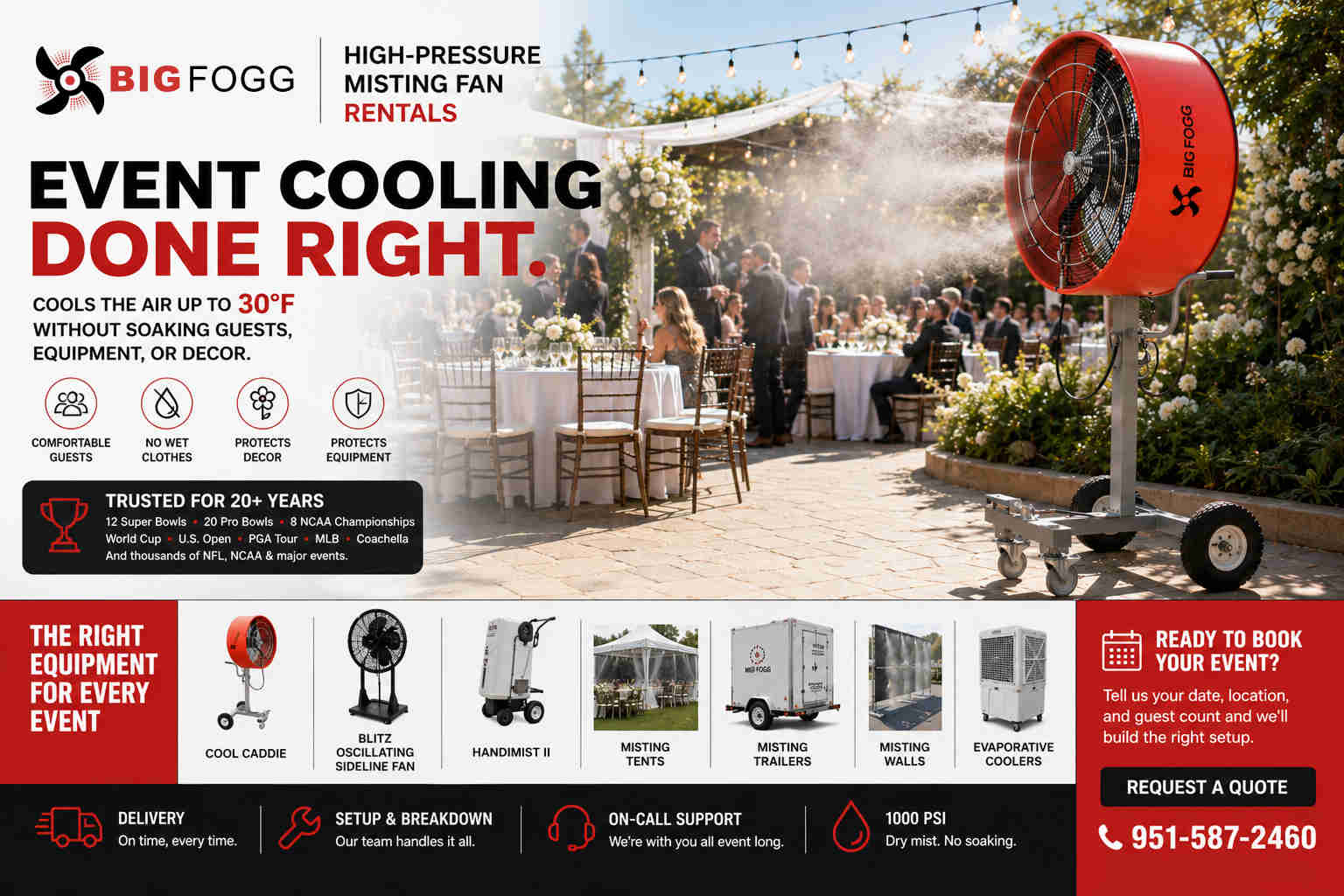
- Misting Systems for Event Spaces and Outdoor Venues
- Agricultural and Livestock Cooling with Misting Systems
- High-Pressure vs. Low-Pressure Misting: Which System Works Best?
- Complete Guide to Commercial Misting Systems
- Everything About Misting Fans for Outdoor Cooling